
Security guard rosters: licence, fatigue and handover checks before assignment
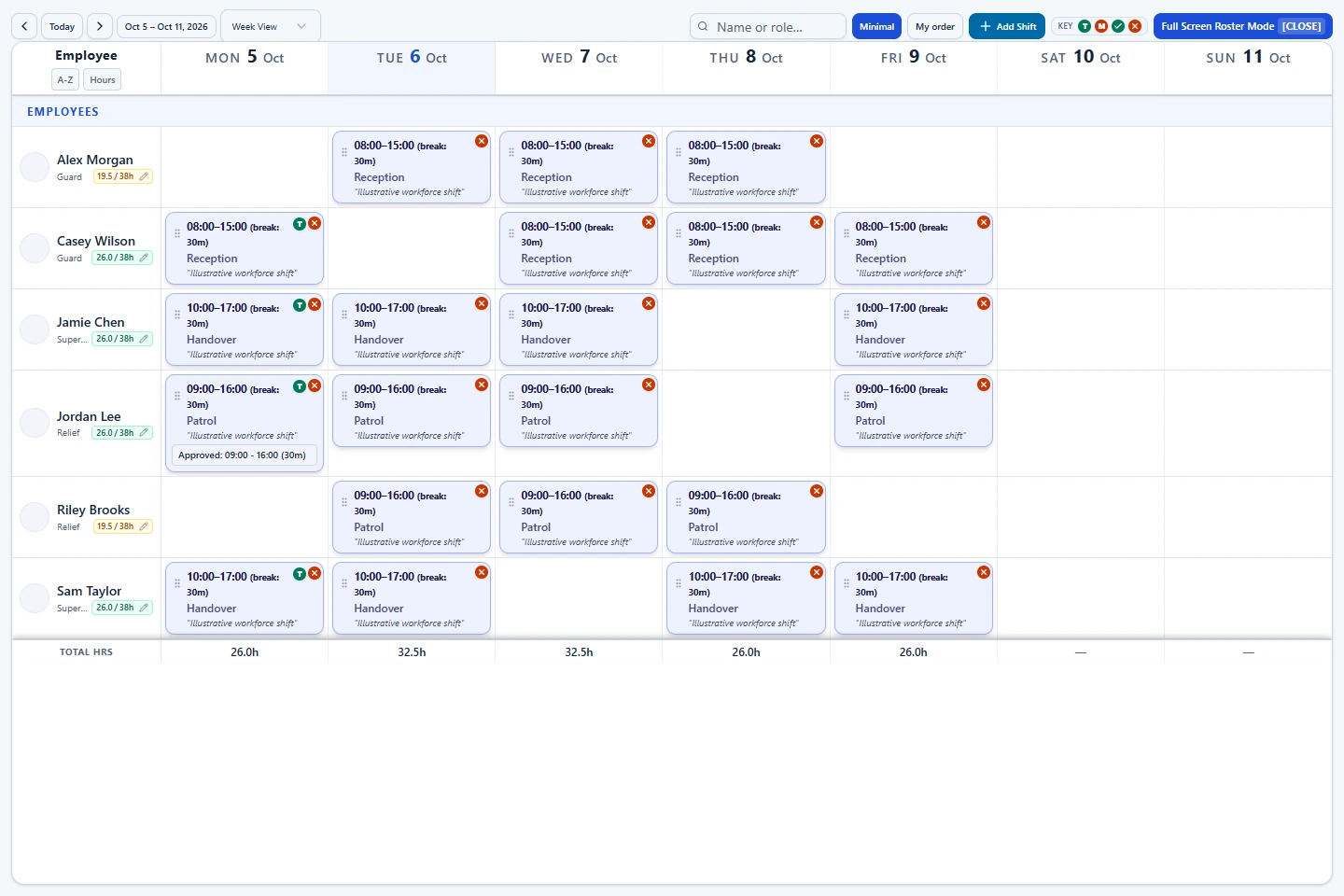
A guard being available does not establish that they are suitable for every site or duty. A good security roster connects the assignment to current authorisations, practical competence, safe working arrangements and a usable handover.
This checklist is for Australian security business owners, operations managers and schedulers. Licensing is jurisdiction-specific. Confirm the relevant state or territory regulator’s requirements and the employment instrument that covers your workforce. A roster system helps organise the evidence; it does not issue a licence or certify that an assignment is lawful.
Define the duty before choosing the person
Write down the actual assignment: site, required role, start and finish, lone-work arrangements, supervision and any special responsibilities. Distinguish the work from the customer’s shorthand description. “Security cover” may conceal duties that need different authorisations or preparation.
Identify the site-specific requirements separately from legal licensing. A client induction or access card may matter operationally, but it is not a replacement for the licence required by the jurisdiction. Conversely, a current licence does not show that a person has received the site briefing.
For multi-state businesses, record the location of the work explicitly. Do not assume a licence held in one jurisdiction automatically authorises every activity in another. Verify any recognition arrangements with the regulator before assignment.
Check the source, scope and expiry
Use the relevant regulator’s official verification process, check the licensed activities and any conditions, and record the date of the check. For example, South Australia Police’s security licensing page points to the state’s licensing arrangements. Other states and territories have their own regulators and categories.
Review expiry against the full assignment, including an overnight finish. A document that is current when the roster is built may expire before the shift takes place. Allocate an owner to renewals and unresolved conditions rather than marking every uploaded file as automatically approved.
Keep the verification outcome in the authorised compliance record. Restrict copies of identification and supporting documents to people who need them. A shared roster can say that a requirement is unresolved without publishing the document itself.
Look beyond a single shift for fatigue
Safe Work Australia’s fatigue guidance recommends managing factors such as working patterns, night work and recovery, with worker consultation. A generic number of hours between shifts is not a complete risk assessment or a universal legal safe harbour.
Review the person’s recent and upcoming pattern: consecutive nights, extended shifts, overtime, travel and other work disclosed through the appropriate process. Ask what the roster cannot tell you. A worker’s availability entry is not proof that they are rested.
Identify controls that fit the assignment. These might involve a different rotation, planned relief, a revised handover or escalation when a person reports fatigue. Check the applicable WHS framework and award or agreement as well as the operational plan.
Worked scenario: the overnight replacement
In this fictional example, an overnight guard becomes unavailable. The replacement has the right site induction, but their recorded licence expiry falls before the planned end of the shift. A second candidate has current authorisations but has just completed another long assignment.
Neither person should be treated as an automatic solution because a roster slot is empty. The operations manager verifies the first candidate’s current regulatory status and reviews the second candidate’s actual work and recovery circumstances. If suitability cannot be established, escalate the service plan with the responsible manager and client contact.
Record the decision and the person who made it. Avoid inserting licence numbers, private explanations or client security procedures in a broadly visible shift note. The roster should point authorised people to the controlled records they need.
Give the incoming guard a useful handover
| Handover area | What to confirm |
|---|---|
| Assignment | Correct site, duty, times and reporting line |
| Access | Authorised access method and controlled instructions |
| Safety | Emergency contact route and lone-work arrangements |
| Relief | Who takes over and what happens if relief is late |
| Records | Where to record attendance, issues and handover completion |
Keep operational security instructions in the appropriate controlled channel. A notification preview on a personal phone is not a suitable place for access codes or sensitive client details.
Set a process for late relief. An unplanned extension affects fatigue, pay and the next assignment. Confirm who can approve it and how the outgoing guard escalates the issue while maintaining safe arrangements.
Close the loop with attendance and compliance review
After the assignment, review actual start and finish times, interruptions and any extended handover. Keep the operational incident record separate from the payroll correction where appropriate. Use a concise reference rather than duplicating sensitive incident details into a timesheet.
ShiftRova’s security workforce page shows the shipped roster and compliance workflows. Optional industry modules depend on organisation permissions; review what is enabled for your business. Uploaded evidence and reminders support the process, while the responsible manager remains accountable for verification and assignment decisions.
For the attendance handover, use the timesheet correction guide. For a wider employment check, the employer obligations pack provides a reusable review register.
General information for Australian national-system employers, reviewed 18 November 2026. Confirm the current award, agreement and individual circumstances with the linked official sources. This is an operational checklist, not legal or tax advice.